


A very comprehensive study of the workshop production of John de Critz the Elder was undertaken by Edward Town for his article in the July 2012 issue of The Burlington Magazine. The varying quality of de Critz’s paintings was considered in light of the revelation that portraits continued to be produced by his workshop after the master’s eye sight had ‘fayled him’. And Town’s fascinating article puts forward the likely hypothesis that portraits might be priced according to the master’s input. These arguments are supported by the evidence gained from TSR’s infrared reflectography, which strongly suggests the repeated use of a face pattern for portraits of de Critz’s patron, Robert Cecil, 1st Earl of Salisbury; a method that would have facilitated the quick and efficient production of multiple portraits.

- Infrared Reflectography Helps Solve the Mystery of Unknown Waterloo Soldier
Exciting research by the National Army Museum supported by technical analysis and conservation undertaken at Lincoln Conservation and infrared reflectography by TSR has allowed the identification and attribution of a recently acquired, rare portrait of a black military musician. Shedding light on the story of Waterloo veteran Thomas James and the wider experiences of black military musicians of the period.
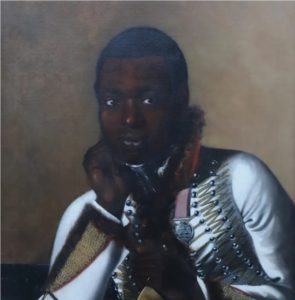
Detail of Thomas Phillips, RA, Portrait of Thomas James (1821). Photo courtesy of Lincoln Conservation.